Impact Report 2025

Revenue generated by invested-in Maryland companies in 2024

Jobs created nationally

Jobs created in Maryland

Total investments since 2008
Portfolio

N5 Sensors is commercializing sensor technology to detect wildfires.

JumpLights is developing lighting solutions for indoor agricultural producers, enabling energy efficiencies and increased crop yields.
PORTFOLIO SPOTLIGHT
New lithium ion battery material chemistries for electric vehicles and additional applications
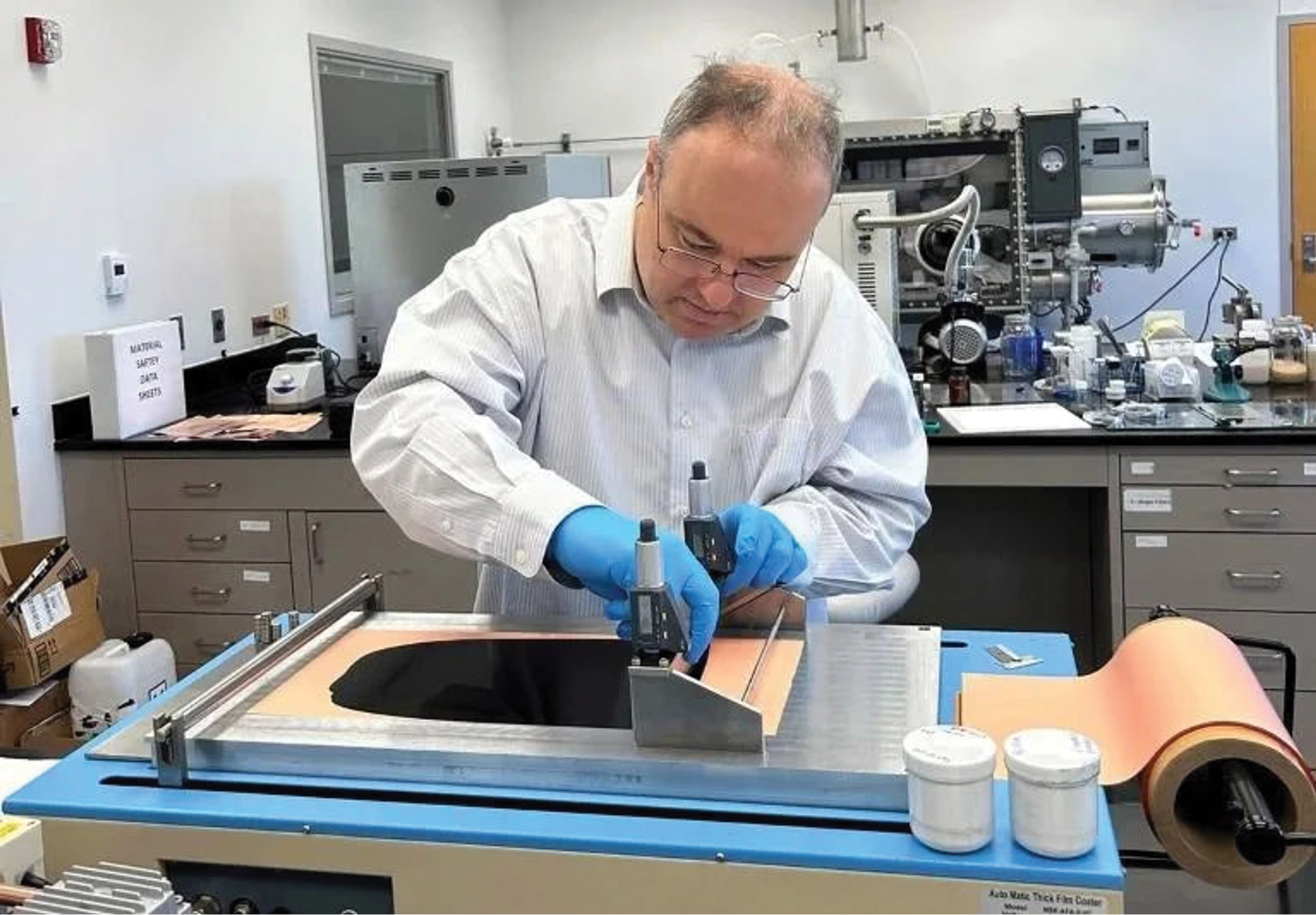
Launched in 2021, AquaLith is targeting the electric vehicle (EV) market with a suite of technologies that improves three parts of a lithium ion battery: the anode, where lithium ions are stored when the battery is charged; the cathode, where they are stored when the battery is discharged; and the electrolyte, where they move back and forth.
The company's anode replaces graphite with silicon micro-particles, which allow batteries to hold ten times as much lithium in the same amount of material. This lowers the cost of the anode by 90 percent, while making batteries lighter and smaller and retaining the same power of current lithium ion batteries.
AquaLith's cathode replaces cobalt with two lithium salts and graphite. Cobalt is a limited resource, primarily mined in the Democratic Republic of the Congo. The company's technology uses widely available materials, which could remove the cobalt bottleneck from the lithium-ion battery supply chain and lowers the cost of the cathode by 90 percent.
Finally, AquaLith's electrolyte is aqueous, or water-based, making it non-flammable, while remaining stable and operating at a high voltage, a staple of lithium ion batteries.
AquaLith's three core technologies were licensed from the University of Maryland in 2021 based on the work of Professor Chunsheng Wang, Robert Franklin and Frances Riggs Wright Distinguished Chair in Chemical and Biomolecular Engineering in the A. James Clark School of Engineering, in collaboration with Kang Xu, Fellow, DEVCOM Army Research Laboratory.
Wang's cathode discoveries were awarded the Overall and Physical Science Invention of the Year awards at the University of Maryland in 2020.
In all, more than $10 million in grant funding was invested in the technology.

Advanced BioNutrition offers environmentally sustainable and science-based bioactive stabilization and delivery solutions for a variety of industries.
Datakwip's software integrates with existing energy systems and fills in data gaps to provide energy consumption, cost, and improvement insights—no additional hardware required.
PORTFOLIO SPOTLIGHT
Platform for acquiring and managing customers for community solar projects
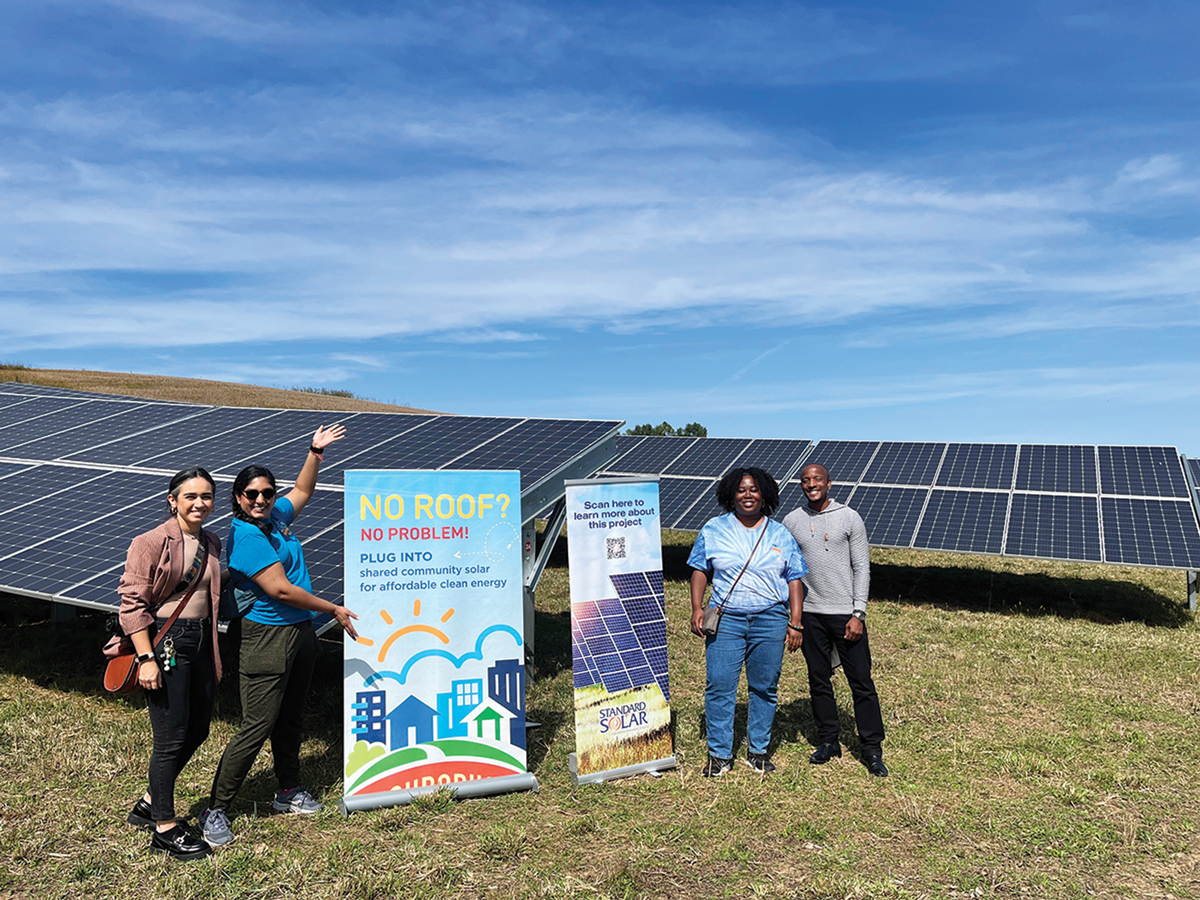
Neighborhood Sun, a Maryland-based Certified B Corporation, provides a fully customizable end-to-end platform for community solar developers and subscribers, making renewable energy accessible to community members who would not otherwise be able to support renewable energy or benefit from the associated savings.
"Community solar" refers to local solar panel farms that are shared by community subscribers, who either receive energy directly or get credit on their electricity bills for their share of the power produced. Community solar negates the need for individual subscribers to install solar panels themselves, while still giving them access to solar energy.
By reducing greenhouse gas emissions in a subscriber's local region, community solar helps to improve local air quality, preserve natural resources, and often create pollinator habitats. Community solar farms also help to increase the resiliency of grids, which is essential during unpredictable extreme weather events.
While it started in Maryland, Neighborhood Sun now manages community solar farms in Maine, Maryland, Massachusetts, New York, New Jersey, District of Columbia, Colorado, and Minnesota.
In 2023, the Maryland state legislature passed House Bill (HB) 908, which: made the state's successful seven-year community solar pilot program permanent; allowed for unlimited community solar capacity; and required that 40 percent of a project's output serves low- to moderate-income (LMI) subscribers.
Neighborhood Sun provides additional discounts and financial support to low-income households through its S.H.A.R.E. (Solar Helps Advance Resident Equality) program and Neighbor Benefit Fund.
In 2023 alone, Neighborhood Sun subscribers saved more than $2.8 million on electricity bills, while solar developer partners generated over 201 million kWh of renewable solar energy. The company donated $10,700 to partner nonprofits and impact-driven businesses, and welcomed 5,045 new subscribers.
AS OF SEPTEMBER 2024:
726,810,886
kWh of clean energy allocated to subscribers since 2019
515,309
metric tons of CO2 prevented since 2019
$8.3 million
saved by subscribers since 2019
Mtech Impact Report 2025
This report is one chapter. Read the rest of the 2025 Impact Report across the Mtech family.
ASPIRE Program »
Chesapeake Bay Seed Capital Fund
You are reading this
Maryland Industrial Partnerships (MIPS) »
Maryland Technology Enterprise Institute (Mtech) »
Mtech Learning and Development »
Mtech Ventures »
NSF I-Corps Mid-Atlantic Hub »
XFoundry »